How To Calculate TDS On Salary
- 5 min read•
- 76,213•
- Published 18 Dec 2025
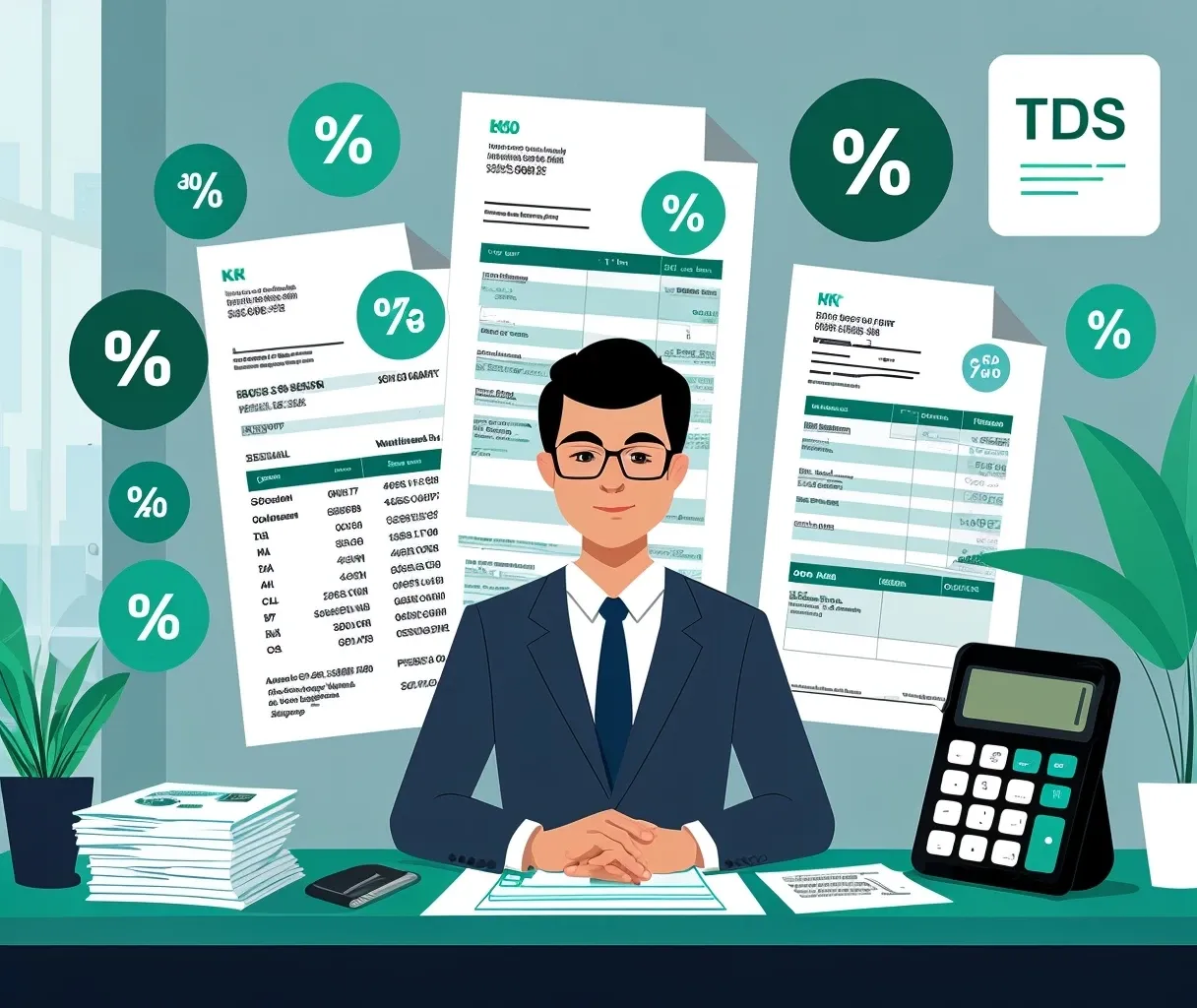
When you receive a payment – as salary from an employer, as a fee for professional services or as interest from the bank – you may notice that a certain percentage of the total sum has been deducted as TDS. This is tax deducted at source. According to Indian tax laws, payers are expected to deduct a percentage of the total payment as tax and deposit it with the government.
What Is TDS?
Tax Deducted at Source (TDS) is exactly what the name suggests. It is the amount of money deducted as tax by the payer before making a payment for any kind of service or job done. TDS has to be paid by individuals as well as businesses.
For example, when an employer gives a salary to his employee, he has to cut a certain percentage of the amount as TDS before making the payment. The employer must then deposit the money with the government.
TDS applies to other types of payments as well – such as rent, commission, interest payment by banks, professional fees, consultation fees, etc. It is mandatory for companies and institutions to deduct this tax and deposit it with the Income Tax Department within the stipulated time.
Individuals do not need to deduct tax at source when making rent payments or giving fees to professionals like doctors and lawyers.
TDS is a form of advance tax, which is paid to the central government regularly. The responsibility of making the payment lies with the payer. If TDS is deducted from a payment made to you, you can claim it while filing your annual returns.
What Is Salary Income?
Salary is the compensation you receive at regular intervals (mostly monthly) for providing a service or a set of skills to a company or business. You will usually have a written or verbal contract with your employer, which stipulates what you must do and how much you will receive.
Under the Indian Income Tax Act (ITA), 1961, a salary includes wages, pension, annuity, gratuity, profits or perquisites as well as commissions, fees, etc.
However, not all kinds of remuneration can be termed as salary. You may also receive payments such as:
-
Professional/ technical fees: Payments made to professionals for services rendered – an interior decorator or a plumber. This can be a one-time payment or a regular payment over a period.
-
Profits or gains from profession or business
-
Interest income on savings and deposits
-
Rental income
-
Payments received as commission
What Is TDS Calculated On?
In India, salary is usually calculated as the Cost To Company (CTC), which covers both salary and perquisites. Perquisites, privileges or perks include facilities and benefits provided by the employer such as travel expenses, fuel subsidy, hotel expenses, etc.
CTC includes:
-
Basic salary
-
Travel allowance
-
House rent allowance
-
Medical allowance
-
Dearness allowance
-
Special allowances
-
Other allowances
From the above, an employee can claim tax exemptions on the following:
-
House Rent Allowance – You can claim an exemption for HRA if you are paying house rent
-
Conveyance or Travel Allowance – You can claim tax exemption for the amount spent on travel or commuting etc.
-
Medical Allowance – You can claim medical allowance by producing bills as evidence
Besides these, the government allows you to claim tax exemptions under Sections 80C and 80D for specific investments, amounts spent on repaying home loans or expenses such as insurance premium. The TDS is, therefore, calculated on your total income less the exemptions that you can claim.
Before making any tax deductions at source, an employer must obtain a declaration and proof of investment from employees. There are maximum limits to the amount that can be declared for exemption.
These exemptions and other tax deductions are available to all taxpayers in FY 2019–20. However, those who are liable to pay income tax in FY 2020–21 have an option:
- They can stick with the old taxation regime, which comes with a slew of tax exemptions and deductions.
- They can opt for the lower tax rates of the new regime. But this would mean giving up many income tax exemptions and deductions—including those under Sections 80C and 80D.
How To Calculate TDS
Employers can calculate TDS using the following method:
-
Calculate total earning: Calculate the total earning of an employee over the year (including perks, commission, bonus etc)
-
Collect declaration: Collect declaration from employees about the investments they plan to make. At the end of the year, collect proof of investment. Without it, the employer cannot approve tax exemptions.
-
Calculate Total Amount Eligible For Tax Exemption: Consider all exemptions that an employee is eligible for. Reduce allowable exemptions from the gross annual salary. This is the taxable income. Based on the tax slab, the employer must deduct tax at source appropriately.
-
Deposit TDS Collections: Deposit the collected TDS with the central government within the stipulated time The ‘basic salary’ component of the CTC is fully taxable, depending on the tax bracket an individual comes under. However, some exemptions for payments made as allowances & perks are available. Here’s how an individual can calculate TDS on income:
-
Add basic income, allowances and perquisites to calculate gross monthly income
-
Compute the available exemptions under Section 10 of the Income Tax Act (ITA)
-
Subtract exemptions found in step (2) from the gross monthly income calculated in step (1)
-
Multiply the number obtained from the above calculation by 12, as TDS is calculated on yearly income. This is your taxable income from salary
-
If you have any other income (e.g. income from house rent or interest), then add this amount to the number obtained in step (4)
-
Reduce investments made under 80C and 80D from the number obtained in step (5) (for e.g. you can get exemptions up to Rs 1.5 lakh under 80C for investments in ELSS, PPF, NSC, repayment of housing loan etc.)
-
Now, for the number obtained in (6), check which income tax slab you come under .
For example, if you are under 60 and your total taxable income is Rs 5 lakh, you must pay 5% of Rs 2.5 lakh as tax (income up to Rs 2.5 lakh is not taxable). Please note, TDS is deducted every month by your employer. So, your expected tax liability over the year is divided by 12 and collected every month.
Read More


